


Vaping is defined as inhaling aerosol produced by heating e-liquid, delivering nicotine without burning tobacco, while smoking combusts tobacco and releases thousands of harmful chemicals into the lungs. The vaping vs smoking comparison matters because the method of delivery changes the risk profile significantly. Health NZ confirms that vaping “is not harmless, but it is less harmful than smoking,” a position now shared by most major public health bodies in 2026. For adult smokers looking to quit, vaping has emerged as a credible harm reduction tool, though it carries its own risks that deserve honest scrutiny.
What are the main health effects of vaping and smoking?
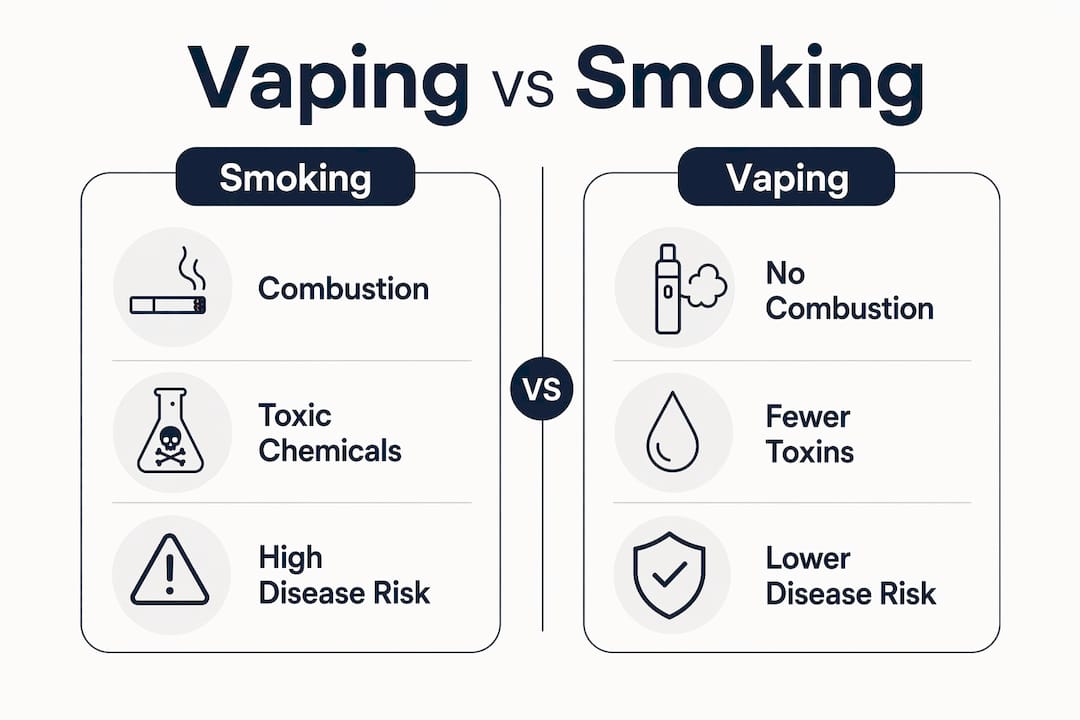
The core difference between vaping and smoking comes down to combustion. When tobacco burns, it produces thousands of chemical compounds, many of which are carcinogenic. Most smoking harm comes from those combustion byproducts, not from nicotine itself. This distinction is what makes vaping a meaningfully different product from a health perspective, though not a safe one.
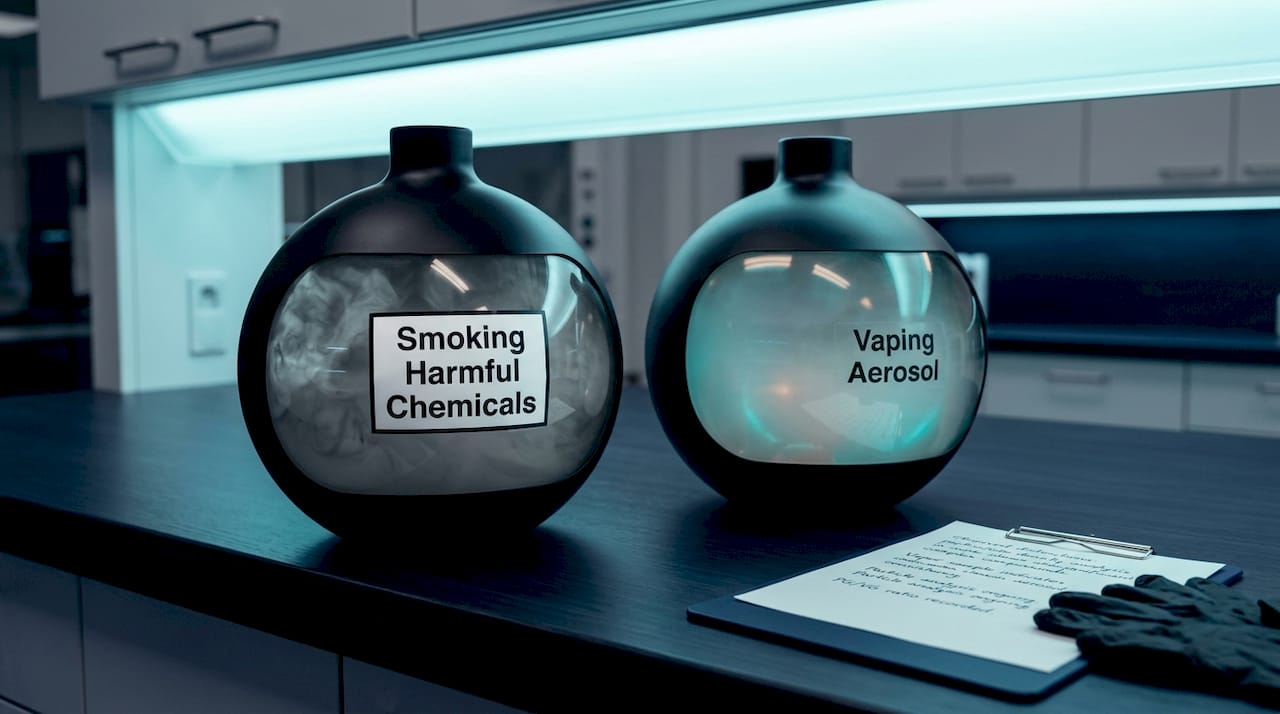
Smoking is directly linked to lung cancer, chronic obstructive pulmonary disease (COPD), cardiovascular disease, and stroke. These conditions develop from long-term exposure to tar, carbon monoxide, and dozens of other toxicants produced when tobacco burns. The damage accumulates over years, which is why lifelong smokers face dramatically higher disease risk than those who quit early.
Vaping avoids combustion entirely. Instead, a coil heats e-liquid containing nicotine, propylene glycol, vegetable glycerine, and flavourings to produce an aerosol. This aerosol contains far fewer toxicants than cigarette smoke, but it is not chemically inert. Dr Leana Wen cautions that vaping is “probably less harmful but not safe,” with emerging evidence pointing to respiratory irritation and potential long-term effects that are still being studied.
Key health considerations for both products include:
- Lung health: Smoking causes irreversible lung damage over time. Vaping can cause airway irritation and, in some cases, inflammation, though the severity appears lower.
- Cardiovascular risk: Nicotine raises heart rate and blood pressure regardless of delivery method. Smoking adds carbon monoxide exposure, compounding cardiovascular strain.
- Cancer risk: Combustion chemicals in cigarettes are established carcinogens. Vaping aerosol contains some potentially harmful compounds, but at far lower concentrations.
- Brain development in young people: Nicotine harms adolescent brain development, making vaping as dangerous as smoking for anyone under 18.
- Long-term unknowns: Vaping has existed for roughly two decades. The long-term data simply does not yet match the 60-plus years of smoking research.
“Less harmful than smoking does not mean safe. For non-smokers and young people, vaping carries real risks with no offsetting benefit.” — Dr Leana Wen, CNN Health, 2026
Separating nicotine addiction risks from combustion-related disease risks is the key to understanding both products clearly. Nicotine keeps people hooked; combustion is what kills them. Vaping removes the second part of that equation, which is why the harm reduction argument has genuine scientific backing.
How do vaping and smoking compare for quitting success?
Nicotine addiction works the same way whether you smoke a cigarette or use a vape device. The brain develops a dependence on nicotine’s effect on dopamine pathways, and withdrawal produces cravings, irritability, and difficulty concentrating. What differs between the two products is the toxicant load that accompanies each nicotine hit.
A 2026 study published in JAMA Network Open found that daily smokers using nicotine e-cigarettes were three times more likely to quit within six weeks compared to those using no-nicotine e-cigarettes. That is a significant finding. It suggests that nicotine delivery through vaping is effective enough to satisfy cravings and break the behavioural habit of smoking simultaneously.
The steps most likely to produce a successful quit using vaping are:
- Choose the right nicotine strength. Under-dosing is one of the most common reasons people relapse to cigarettes. Nic salts at 10mg or 20mg are often more effective for heavy smokers than freebase nicotine at lower concentrations.
- Switch completely, not partially. Dual use, meaning vaping and smoking at the same time, maintains high toxicant exposure and undermines the health benefit.
- Match your device to your habit. A pod kit with mouth-to-lung draw closely mimics the feel of a cigarette, which helps with the behavioural side of quitting.
- Reduce nicotine gradually. Once you have stopped smoking entirely, stepping down nicotine concentration over several months is the path toward full cessation.
- Seek medical support. Vaping is not FDA-approved as a cessation device, and a GP or pharmacist can combine vaping with structured support for better outcomes.
Pro Tip: If you find yourself vaping more frequently than you smoked, your nicotine strength is probably too low. Increasing it slightly often reduces overall consumption and makes the transition more comfortable.
Complete switching from smoking to vaping reduces exposure to smoking-related toxicants significantly. Dual use does not. The goal is always full cessation of combustible tobacco, with vaping as the bridge, not the destination.
What are the cost and lifestyle differences between vaping and smoking?
Cost is one of the most practical factors in the vaping vs smoking comparison, and the numbers favour vaping in most scenarios. A 20-a-day smoker in the UK spending around £14 per pack spends roughly £5,000 per year on cigarettes. A vaper using a mid-range pod kit and two bottles of e-liquid per week typically spends between £600 and £1,200 annually, depending on device choice and usage. You can explore a detailed cost breakdown for vapers to see how the numbers stack up for your specific habit.
Vaping costs vary depending on device type, e-liquid brand, and nicotine concentration, so the savings are not uniform. A disposable vape habit, for example, can approach cigarette costs if used heavily. Refillable pod systems and open-tank devices offer the best long-term value.
| Factor | Smoking | Vaping |
|---|---|---|
| Annual cost (typical UK user) | £4,000 to £5,500 | £600 to £1,200 |
| Odour | Strong, lingers on clothes and breath | Minimal, dissipates quickly |
| Social restrictions | Banned indoors, designated areas only | Varies by venue, generally more flexible |
| Device maintenance | None | Coil changes, tank cleaning, charging |
| Product variety | Limited (cigarettes, roll-ups) | Extensive (devices, flavours, nic strengths) |
Beyond cost, the lifestyle differences are noticeable from the first week of switching:
- Vaping produces no tar, so teeth staining and the distinctive smell of stale smoke are largely eliminated.
- You can adjust nicotine strength, flavour, and vapour volume to suit your preference, something cigarettes do not allow.
- Devices require charging and occasional coil replacement, which adds a small maintenance routine that smokers do not have.
- Accessing quality products is straightforward through online retailers or a local vape shop near you, with same-day collection available in many areas.
The social dimension matters too. Vaping is generally perceived as less intrusive than smoking, and many venues that prohibit smoking permit vaping in designated areas. For people who smoke socially, this flexibility can make the transition feel less disruptive.
What misconceptions about vaping affect public health decisions?
A growing body of research shows that public perception of vaping has shifted in the wrong direction. A 2026 UT Southwestern study found a drop in the proportion of people who perceive e-cigarettes as less harmful than smoking, despite evidence supporting that position. This matters because smokers who believe vaping is equally or more dangerous are less likely to switch, and therefore remain exposed to the far greater harms of combustible tobacco.
Common misconceptions that affect decision-making include:
- “Vaping is just as bad as smoking.” The evidence does not support this. Vaping avoids combustion and the thousands of chemicals it produces. The harm profile is different and, for adult smokers, meaningfully lower.
- “Nicotine causes cancer.” Nicotine is addictive, but it is not the primary carcinogen in cigarettes. Cancer risk comes predominantly from combustion chemicals like benzene, formaldehyde, and polycyclic aromatic hydrocarbons.
- “Vaping is safe for everyone.” It is not. For non-smokers, young people, and pregnant women, vaping carries risk with no offsetting benefit. The harm reduction argument applies specifically to adult smokers switching away from cigarettes.
- “Vaping helps you quit automatically.” Quitting requires the right nicotine strength, complete switching, and often structured support. Vaping is a tool, not a guaranteed solution.
“Balanced public health messaging must discourage youth vaping while supporting adult smokers with accurate risk information. Getting that balance wrong in either direction causes real harm.” — UT Southwestern expert commentary, 2026
The regulatory picture reflects this tension. The WHO has raised concerns about youth nicotine addiction from vaping, and the FDA has not approved any e-cigarette as a cessation device. UK regulators take a more permissive stance, recognising vaping’s role in harm reduction for adult smokers while tightening rules on youth access and product standards. Misinformation in either direction, whether overstating vaping’s safety or understating smoking’s harm, makes it harder for people to make genuinely informed choices.
Key takeaways
Vaping is less harmful than smoking for adult smokers because it removes combustion, but it is not harmless, and complete cessation of all nicotine products remains the healthiest long-term goal.
| Point | Details |
|---|---|
| Combustion is the key difference | Smoking burns tobacco and releases thousands of toxicants; vaping heats e-liquid and produces far fewer harmful compounds. |
| Vaping supports quitting when done correctly | Nicotine e-cigarettes triple quit rates vs placebo, but only when users switch completely and use the right nicotine strength. |
| Dual use carries high risk | Vaping while continuing to smoke maintains toxicant exposure and removes most of the harm reduction benefit. |
| Cost savings are substantial | Switching from cigarettes to a refillable vape device typically saves UK users between £3,000 and £4,000 per year. |
| Misinformation hinders cessation | Rising public belief that vaping equals smoking in harm discourages smokers from switching, keeping them at greater risk. |
Why the nuance here genuinely matters
I have spoken with a lot of people who are stuck in a frustrating middle ground: they know smoking is damaging them, they have heard vaping might help, but they are paralysed by conflicting headlines. That paralysis is itself a health risk. Every month spent smoking instead of switching is another month of combustion chemical exposure.
The evidence in 2026 is clearer than the public debate suggests. Vaping is not a lifestyle upgrade or a harmless hobby. For a non-smoker, picking up a vape device makes no sense at all. But for someone who has smoked for years and cannot quit through willpower or patches alone, a well-chosen vape kit with the correct nicotine strength is a genuinely useful tool. The Penn State research on nicotine satisfaction and quit rates reinforces what many cessation specialists already knew: getting the nicotine dose right is the difference between success and relapse.
What I would caution against is treating vaping as a permanent replacement rather than a transitional step. The goal should always be full cessation. Use vaping to get off cigarettes, then work on reducing nicotine concentration over time. Talk to your GP. Use the structure available to you. And if you are going to vape, buy quality products from a reputable source so you know exactly what you are inhaling.
Ready to make the switch? Vapourvista can help
If you are a smoker considering vaping as a way to reduce harm and cut costs, Vapourvista stocks an extensive range of starter kits, pod systems, nic salts, and e-liquids from premium brands at some of the lowest prices in the UK.

Whether you want same-day collection or fast nationwide delivery, Vapourvista makes it straightforward to get started without overspending. Their expert team can guide you on nicotine strength, device type, and which starter bundle suits your smoking habit. Order through UK vape delivery and have everything you need to begin your switch delivered directly to your door. No guesswork, no overpriced high-street mark-ups, and a loyalty programme that rewards you for every purchase.
FAQ
Is vaping safer than smoking for adults?
Vaping is less harmful than smoking for adult smokers because it avoids combustion and the thousands of toxic chemicals tobacco burning produces. It is not risk-free, and long-term effects are still being studied, but the harm reduction evidence for complete switchers is well established.
Can vaping help you quit smoking?
A 2026 JAMA Network Open study found that smokers using nicotine e-cigarettes were three times more likely to quit within six weeks compared to those using no-nicotine devices. Success depends on choosing the correct nicotine strength and switching completely rather than vaping and smoking simultaneously.
Is vaping safe for young people or non-smokers?
No. Nicotine harms adolescent brain development, and e-cigarettes carry risks with no offsetting benefit for non-smokers or young people. Vaping as a harm reduction tool applies specifically to adult smokers switching away from cigarettes.
How much cheaper is vaping than smoking in the UK?
A typical UK smoker spending around £14 per pack on a 20-a-day habit spends roughly £5,000 per year. Switching to a refillable vape system typically costs between £600 and £1,200 annually, representing a saving of £3,000 to £4,000 depending on usage and device choice.
Why do some people think vaping is as harmful as smoking?
A 2026 UT Southwestern study found a significant drop in the proportion of people who correctly perceive e-cigarettes as less harmful than smoking. This shift is driven by media coverage of vaping-related illness outbreaks and broad public health warnings, some of which conflate youth vaping risks with the adult harm reduction picture.