


Local vape collection is defined as picking up your vaping products directly from a nearby shop or local hub, bypassing the costly and cumbersome delivery processes imposed by carrier regulations and compliance laws. For UK vapers, the practical case for collection over shipping is clear: no waiting in for a courier, no failed delivery attempts, and no added fees eating into your budget. Laws like the PACT Act in the United States illustrate exactly why vape shipping is treated as a compliance workflow rather than simple logistics, and the same friction applies wherever age-restricted products are sold. Whether you buy nic salts, pod kits, or disposables, understanding why vape collection beats shipping helps you make smarter, more cost-effective purchasing decisions.
Why does vape shipping face such strict compliance challenges?
Vape shipping is not treated like posting a parcel of books. It is classified as an age-restricted, regulated product category, and that classification creates significant operational friction at every stage of delivery.
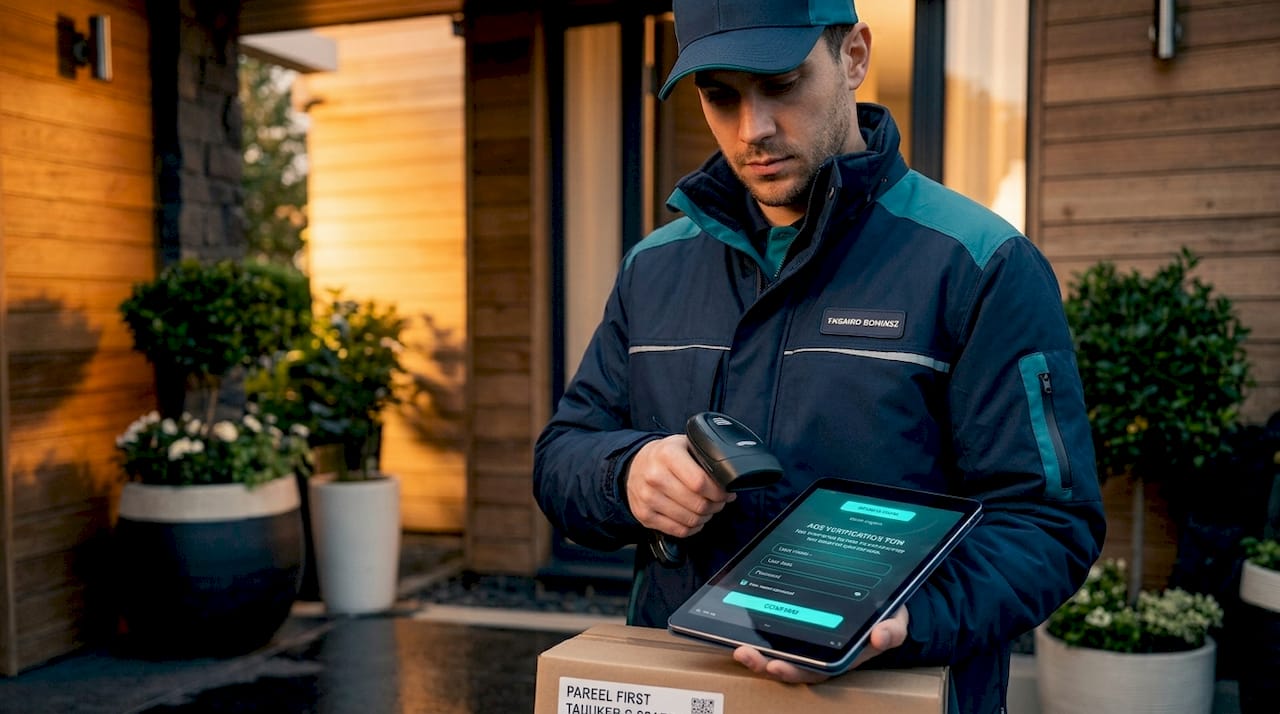
In the United States, the PACT Act is the primary legal framework governing this area. Under the Act, USPS is prohibited from delivering electronic nicotine delivery systems (ENDS) entirely. That single restriction forces retailers to seek alternative carriers, and those alternatives come with their own complications.
Major carriers have responded by stepping back from the category altogether. FedEx and UPS have banned consumer vape shipments due to compliance complexities, leaving retailers dependent on a patchwork of specialist regional couriers. This fragmentation means delivery reliability varies significantly depending on where you live.
The compliance burden does not stop at carrier selection. Retailers must also:
- Register with federal and state tax authorities before shipping to each state
- Collect and remit applicable excise taxes on vape products
- Submit monthly sales reports to state revenue departments
- Verify customer age before dispatch and require adult signature at delivery
That last point is where the consumer experience breaks down most visibly. Multiple delivery attempts are typically required when no adult is present to sign, increasing delivery times and customer frustration considerably. A missed delivery does not just mean a delay. It can mean a returned parcel, a refund dispute, and a reorder.
Pro Tip: If you do order vapes online, check whether the retailer uses a specialist age-verified courier before completing your purchase. Generic next-day services are unlikely to be compliant and may result in your order being refused or returned.
The high compliance complexity under the PACT Act deters many retailers from offering shipping outside major urban centres at all. For vapers in smaller towns or rural areas, local collection is often the only reliable option available.
How does local collection make buying vapes more convenient?
Convenience is the single biggest practical advantage of collecting your vapes locally, and it operates on several levels that shipping simply cannot match.
When you collect from a local shop, you set the schedule. There are no delivery windows to plan your day around, no risk of missing a courier, and no need to arrange a neighbour to accept a parcel on your behalf. The product is ready when you are. A 2026 report from New York City confirmed that convenience strongly influences user participation in vape collection schemes, a finding that applies equally to purchasing behaviour. When the responsible or practical option is also the easiest one, people choose it consistently.
Here is how local collection removes the friction points that shipping routinely creates:
- No rigid delivery windows. You collect when it suits you, not when a courier’s route brings them to your door.
- No adult signature stress. The age verification happens in person at the point of collection, once, without repeated attempts.
- No failed deliveries. There is no risk of a parcel being returned to the depot or sent back to the retailer.
- Immediate product access. You walk out with your pods, kit, or e-liquid the same day, often within hours of ordering.
- Expert advice on the spot. Local vape shops provide personal contact and immediate problem-solving that no shipping label can replicate.
That fifth point deserves particular attention. If you are new to vaping or switching devices, having a knowledgeable member of staff explain coil performance, adjustable wattage settings, or the difference between freebase nicotine and nic salts is genuinely valuable. No online checkout process offers that.
Pro Tip: Many vape shops now offer same-day or scheduled collection slots when you order online before midday. Check whether your preferred retailer has this option before defaulting to standard delivery.
What does vape shipping actually cost you compared to collection?
The true cost of shipping vapes is routinely underestimated because most buyers focus on the product price alone. Shipping fees on small vape orders often add £8 to £15 per delivery, which can negate any savings made on the product itself. That is a significant premium on a single bottle of e-liquid or a replacement pod pack.
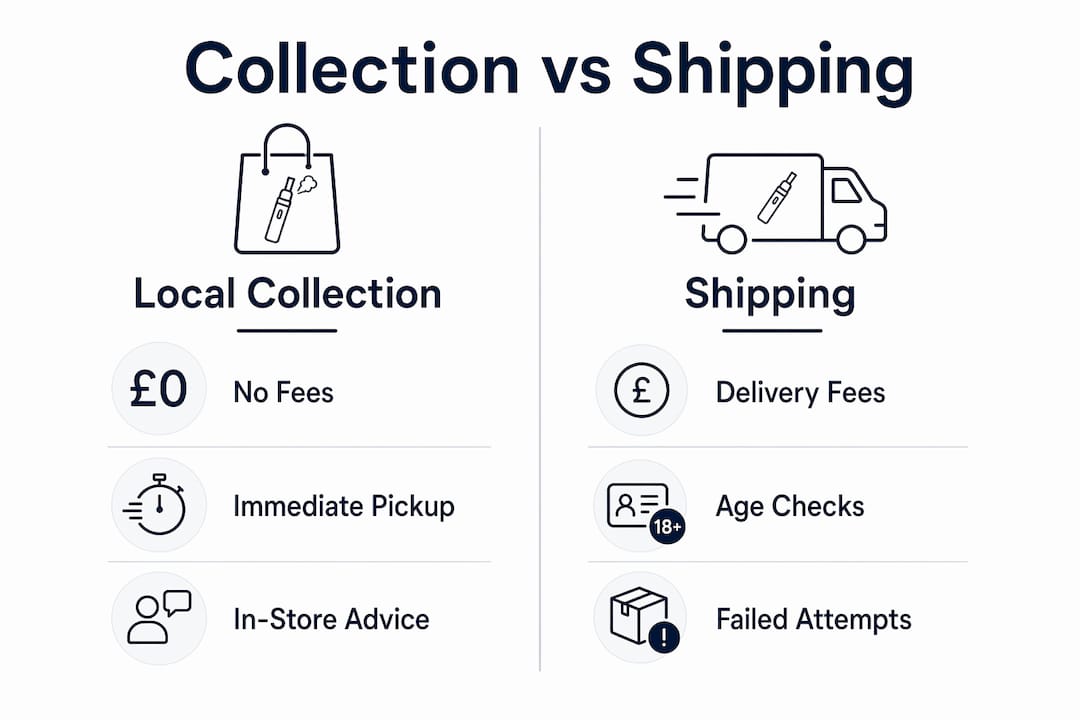
The table below compares the two approaches across the factors that matter most to regular vapers:
| Factor | Local collection | Shipping |
|---|---|---|
| Delivery fee | None or minimal | £8–£15 per order |
| Time to product | Same day | 1–5 working days |
| Failed delivery risk | None | High (age verification required) |
| Compliance friction | Handled in-store | Carrier and retailer dependent |
| Access to advice | Yes, in person | No |
| Flexibility | Collect when ready | Fixed delivery window |
Cost analyses that ignore shipping fees misrepresent the true cost to consumers. A pod kit priced at £25 with a £12 delivery charge costs £37. The same kit collected locally at £28 is the better deal, even though the listed price is higher.
There are ways to reduce the impact of shipping costs if collection is not available to you:
- Consolidate orders. Buying in bulk reduces the per-unit shipping cost significantly. Bulk purchasing is one of the most reliable ways to offset delivery fees on retail vape products.
- Use subscription or loyalty schemes. Some retailers offer free or discounted shipping above a spend threshold, which rewards planned purchasing over impulse buying.
- Compare total basket cost. Always add the delivery fee before comparing prices across retailers. The cheapest listed price is rarely the cheapest final price.
How does your collection method affect product management and routine?
Beyond cost and convenience, the way you acquire your vapes shapes your overall experience as a regular user. Collection supports a more predictable, routine-based approach to resupply that shipping struggles to match.
Planning purchases and consolidating orders into local collections prevents the friction and cost of frequent single shipments. A vaper who picks up a month’s supply of nic salts and replacement coils in one visit avoids the cycle of impulse orders, each carrying its own delivery fee and waiting period. That cycle is expensive and disruptive to your routine.
Local collection also supports better product variety management. When you are in a shop, you can see what is in stock, ask about new arrivals, and make informed decisions about trying a different flavour or device. Shipping relies on accurate online stock information, which is not always up to date. Receiving a substitution or an out-of-stock notification after you have already waited three days is a frustrating experience that collection eliminates entirely.
There is also a practical troubleshooting dimension. If a coil is performing poorly or a pod is leaking, a local shop can assess the issue immediately and offer a replacement or advice. That kind of immediate support is not available through a returns process that takes days and requires you to package and post a faulty product. For vapers managing adjustable wattage devices or experimenting with different resistance coils, that access to expertise is a genuine advantage.
Key takeaways
Local vape collection beats shipping because it removes compliance friction, eliminates delivery fees, and gives you immediate access to products and expert advice that no courier service can provide.
| Point | Details |
|---|---|
| Compliance drives shipping complexity | The PACT Act and carrier bans make vape shipping a regulated, multi-step process prone to failure. |
| Collection removes delivery friction | No adult signature stress, no failed attempts, and no rigid delivery windows to plan around. |
| Shipping fees distort true cost | Fees of £8–£15 per order make collection the better value option for most single or small purchases. |
| Routine collection improves product management | Monthly local pickups reduce impulse orders, save money, and support better stock planning. |
| In-store advice adds real value | Local shops offer immediate troubleshooting and product guidance that online ordering cannot replicate. |
Why I think most vapers underestimate the cost of shipping
By Daniel P
After years of buying vapes both online and in person, I have come to a clear conclusion: the shipping option looks attractive right up until you add it to your basket. That £12 delivery fee on a £20 order is not a minor inconvenience. It is a 60% price increase that most people absorb without questioning it.
The compliance angle is something I find genuinely underappreciated. Viewing vape delivery as a compliance workflow rather than simple logistics explains why so many shipments fail or arrive late. It is not the retailer being careless. It is a system designed around age verification and regulatory reporting that creates friction at every step.
My honest recommendation is to build a relationship with a local vape shop you trust. The ability to walk in, ask a question about coil resistance or nic salt strength, and leave with exactly what you need is worth more than the marginal convenience of ordering from your sofa. Collection is not a compromise. For most regular vapers, it is simply the better option.
— Daniel P
Get the best of both worlds with Vapourvista
Vapourvista offers same-day collection alongside fast UK delivery, so you are never stuck waiting when you need to restock. Whether you are after pods, starter kits, or e-liquids, the product range covers everything from entry-level bundles to premium devices, all at some of the lowest prices available in the UK. The loyalty programme rewards every purchase with points, making regular collection even more cost-effective over time.
If you want to skip the delivery fees and get your hands on quality vapes today, explore same-day collection options and find your nearest Vapourvista location. For those times when delivery is the right call, UK-wide vape delivery is available with full compliance and fast dispatch.
FAQ
Why does vape collection beat shipping for most buyers?
Local vape collection removes delivery fees, eliminates failed delivery attempts caused by age verification requirements, and gives you immediate access to your products. For regular vapers, collection is consistently more cost-effective and reliable than shipping.
Is vape shipping legal in the UK?
Vape shipping is legal in the UK but subject to age verification requirements at the point of delivery. Retailers must confirm the buyer is 18 or over, which can result in failed delivery attempts if no adult is present to sign.
How much does vape shipping typically cost?
Shipping fees on small vape orders typically add £8 to £15 per delivery. On smaller orders, this fee can exceed the savings made on the product price itself, making local collection the better value option.
Can I get same-day vapes without paying for express delivery?
Yes. Many local vape shops, including those partnered with Vapourvista, offer same-day collection when you order online before a set cut-off time. This gives you the speed of express delivery without the associated cost.
What are the main disadvantages of shipping vapes?
The main disadvantages include delivery fees, the risk of failed delivery attempts due to adult signature requirements, reliance on specialist couriers following carrier bans by FedEx and UPS, and the absence of in-person product advice or troubleshooting support.